
Up: Tice & Jacobs

IDC: 6 of 24
|
|
| |
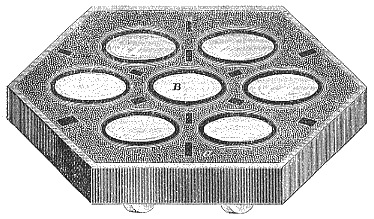
Fig. 4.
Fig. 4 represents the upper surface
of a tile into which the Jacobs' Pendent Lens has been inserted.
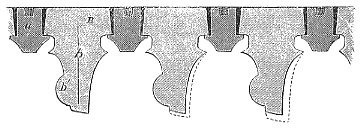
Fig. 5.
Fig. 5 represents three rows of lenses,
as set in a tile, showing one glass dropping below the other,
(see dotted lines) thus giving each row an opportunity to diffuse
light without being obstructed by the one in front of it.
In all other pendent lights the lenses
hang out of centre when set, by reason of the angle to which
they lean, and the least jar loosens the glass and causes leakage.
We entirely obviate this difficulty, by the fact that Jacobs'
Pendent Lenses hang at a right angle with the tile, and the
weight of the pendent assists in holding the glass in its proper
position.
But the greatest difficulty in
all other pendent lenses has been to keep the pendent
clean, as some moisture will filter through the cement
surrounding the glass, and run down upon the lower portion of
the same, thereby collecting dust and greatly obscuring the
light.
While recognizing the fact that the
moisture will get through the tile, we preserve the
pendent from obscuration by catching whatever water
may run down upon the lens, and causing the same to drip from
the sharp edge of the projecting flange, (as shown by arrows,)
thus keeping the pendent absolutely free from moisture and
rust.
These lenses make excellent deck lights
for vessels.
|
|