industry, and it works best in square or oblong walls, with a plain floor
in place of the grate. Entering at each end, it is mixed with air which
has become heated by passing through chambers in the fire-brick arches
that support the furnace, on the plan of the Bunsen burner, producing an
intense heat, which can be perfectly controlled. In all cases a well is
built under the furnace to receive the molten glass that may escape from
a broken pot.
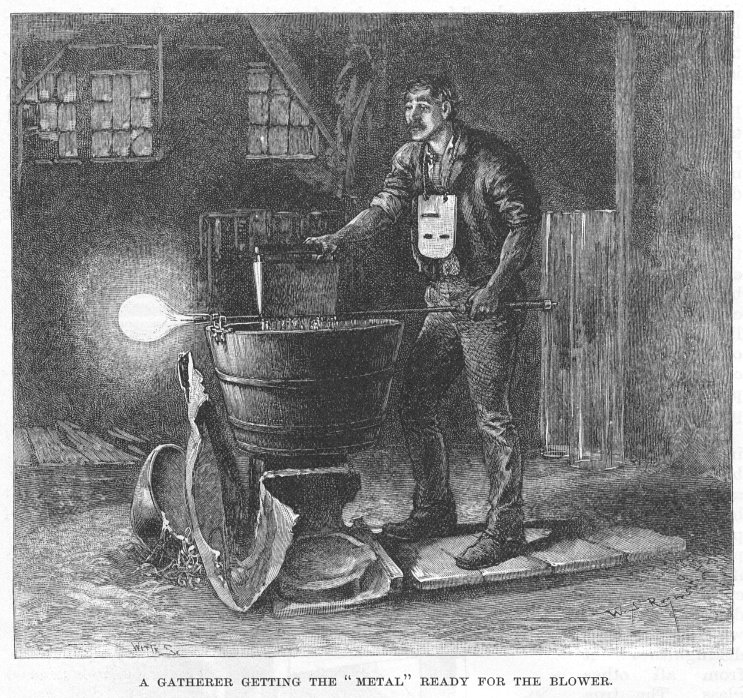
The melting-pots for window, plate, or green
glass are open truncated cones, the smallest diameter and thickest
structure being at the bottom. For flint-glass the crucibles, or
"monkey-pots," are usually oval cylinders with a rounded covering
opening only on the top of one side. The pots demand for their manufacture
the most tedious and exacting work of the entire industry, as the slightest
flaw in structure or material is sufficient to waste all their precious
contents. They are a
|
costly item in the manufacture, as each pot is worth from $40 to $100,
and they are delicate creatures requiring most fastidious handling. From
the digging of the clay until it is refined, mixed, kneaded, and built
into pots, and these thoroughly dried, heated, and set in place, months
of careful nurture are required. The average life of an open pot in its
furnace home is only about seven weeks, and the most hardy "monkey" seldom
survives three months. Most of them die prematurely from invisible weakness
of constitution, from bad treatment in the pot arch, or from being
"starved," that is, exposed to a current of cold air through the attendant's
neglect. The pots are made of fire-clay obtained at St. Louis or imported
from Germany or England, and mixed in varying proportions of raw and burned
clay and pieces of the broken pots called "pot shells," freed from glass
and ground fine. The pulverized mixture is moistened
|