Up: Glassmaking

Gilbert: 5 of 65
|
|
| |
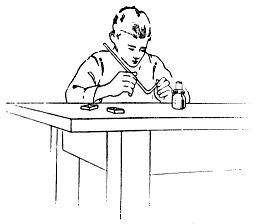
FIG. 4
BENDING GLASS
|
all of these uses depend upon the facts which you have just illustrated,
namely, that glass becomes soft when heated and hard when cooled again.
THE LAMP
The wick should be cut straight across and
should project above the wick holder about 1/8 inch
(Fig. 5), or a little more if you require more heat. Burn wood
alcohol or grain alcohol, because they give flames without soot
or smoke. Fill the lamp to within ½ inch of the top only;
it will burn one hour. The hottest part of the flame is not down
close to the wick, as most beginners suppose, but up just beneath
the tip.
Buy your alcohol at the drug store in
quantities of one pint or more. When you are through experimenting
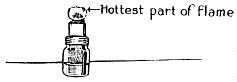
FIG. 5
THE LAMP
|
for the day pour the alcohol from the lamp back into the pint bottle
and cork the bottle tightly.
Alcohol left in the lamp gradually evaporates and is lost.
Do not let the lamp stand with alcohol in
it for any considerable time-- overnight for example-- because
fuel alcohol contains water and when it evaporates from the wick,
the alcohol
|
|