Hold a clean, dry, cold tumbler over your alcohol lamp flame
(Fig. 96). Does water deposit in the form of mist
on the inside of the tumbler?

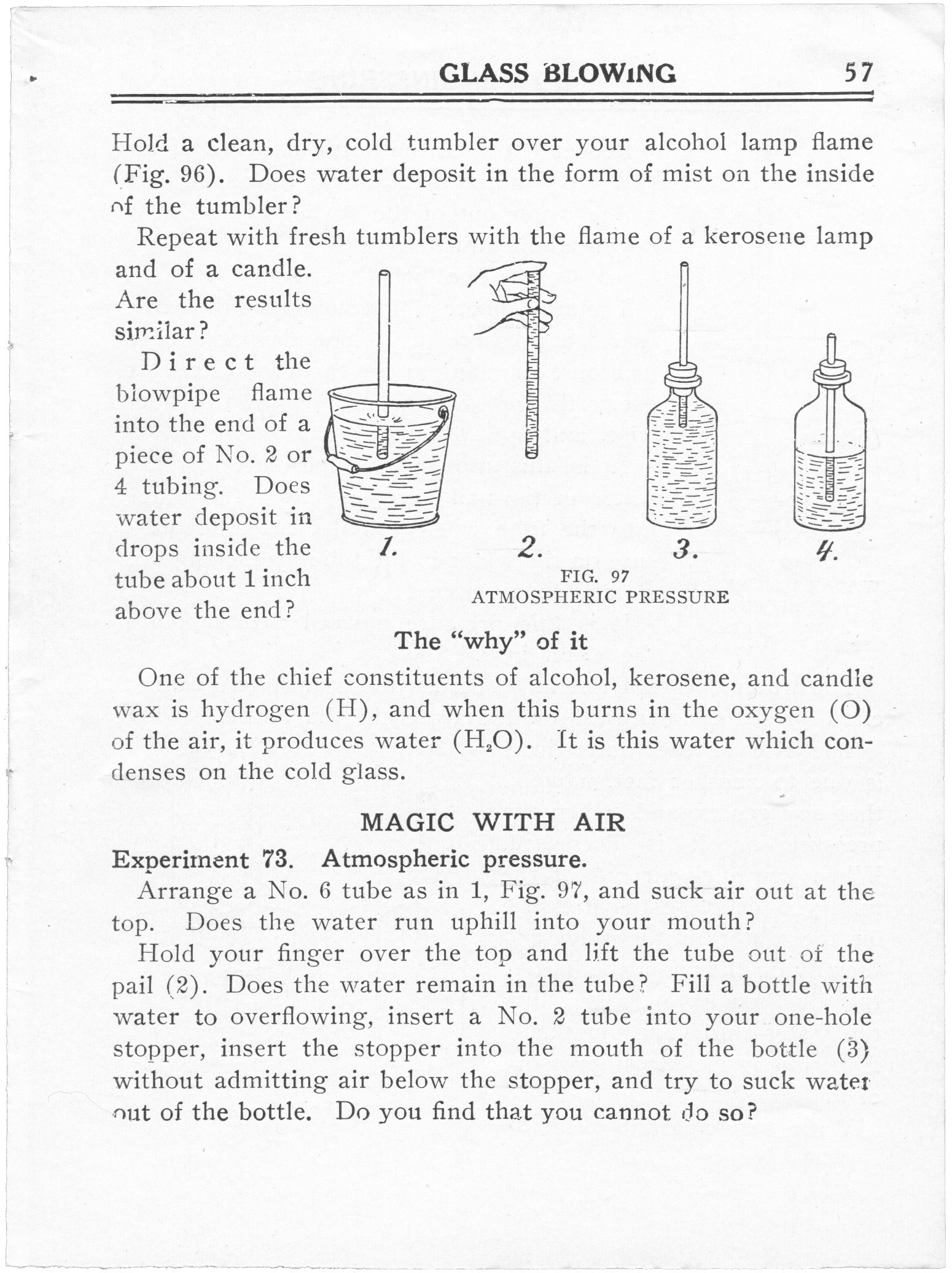
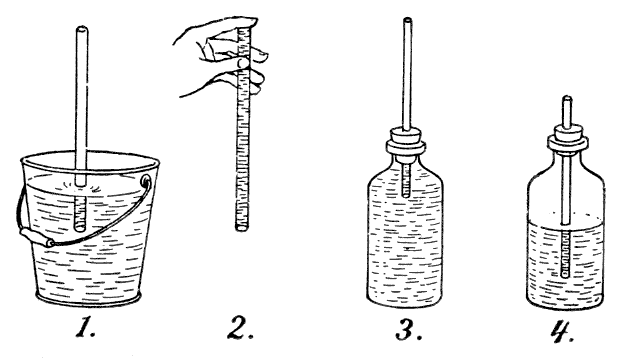
FIG. 97
ATMOSPHERIC PRESSURE
|
Repeat with fresh tumblers with the flame of a
kerosene lamp and of a candle. Are the results similar?
Direct the blowpipe flame into the end of a
piece of No. 2 or No. 4 tubing. Does water deposit in drops inside the
tube about 1 inch above the end?
The "why" of it
One of the chief constituents of alcohol,
kerosene, and candle wax is hydrogen (H), and when this burns in the
oxygen (O) of the air, it produces water (H2O). It is
this water which condenses on the cold glass.
MAGIC WITH AIR
Experiment 73. Atmospheric pressure.
Arrange a No. 6 tube as in 1, Fig. 97, and
suck air out at the top. Does the water run uphill into your mouth?
Hold your finger over the top and lift the tube
out of the pail (2). Does the water remain in the tube? Fill a bottle
with water to overflowing, insert a No. 2 tube into your one-hole stopper,
insert the stopper into the mouth of the bottle (3) without admitting air
below the stopper, and try to suck water out of the bottle. Do you find
that you cannot do so?
|