repeat the operation until it does. Smooth the rough edges outside
and inside with the file. You cannot do this with the flame because
the glass is too brittle.

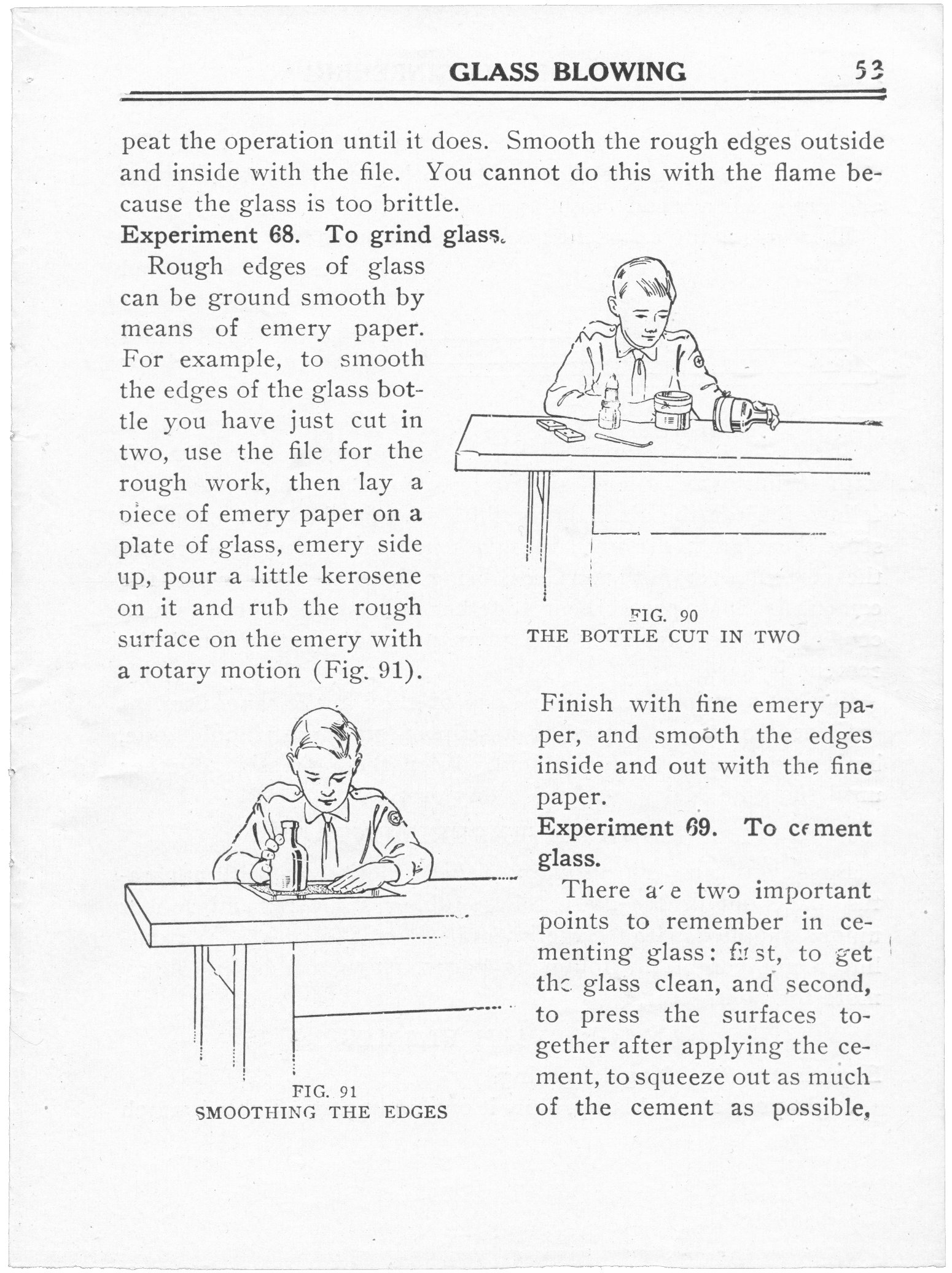
FIG. 90
THE BOTTLE CUT IN TWO
|
Experiment 68. To grind glass.
Rough edges of glass can be ground smooth
by means of emery paper. For example, to smooth the edges of the
glass bottle you have just cut in two, use the file for the rough work,
then lay a piece of emery paper on a plate of glass, emery side up,
pour a little kerosene on it and rub the rough surface on the emery
with a rotary motion (Fig. 91).

FIG. 91
SMOOTHING THE EDGES
|
Finish with fine emery paper, and smooth the edges inside and out
with the fine paper.
Experiment 69. To cement glass.
There are two important points to remember
in cementing glass: first, to get the glass clean, and second, to
press the surfaces together after applying the cement, to squeeze out
as much of the cement as possible,
|